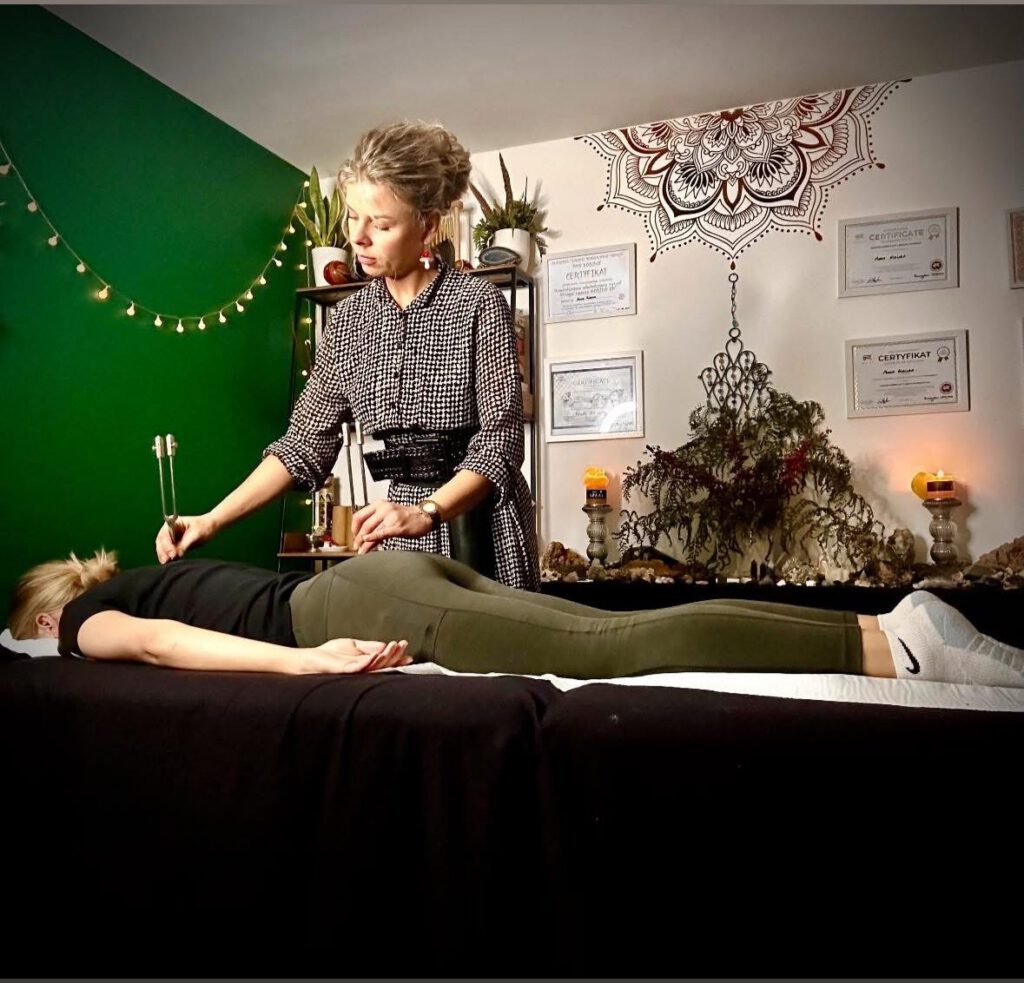
What sound therapy is and how it works on the nervous system
The first time someone strikes a bowl right beside your head, it can take you by surprise. A moment later the sound spreads out, the body softens, and the breath lengthens all on its own. That is usually how sound therapy begins, gently and with no effort at all on your part.
What sound therapy is
Sound therapy uses the vibration of bowls, gongs and the voice to help the body move into a state of deep rest. It is not a concert, nor a meditation you have to learn. You lie down comfortably, wrapped in a blanket, and I hold the whole thing with sound.
You don’t have to do anything or “feel it correctly”. Your only task is to allow yourself to be, and to hand the lead over to the sound, which carries you to wherever your body needs rest the most.
How sound works on the nervous system
Slow, steady sound waves support the relaxation response: the breath lengthens, tension in the body lets go, and the mind slows down. For many women this is the first moment in months when they truly let go.
When the nervous system steps out of “fight or flight”, the body gets the signal that it is safe. Only then does real recovery begin, and you feel that you can finally stop being on guard.
What you can experience during a session
Every session is different. Most often a deep release comes, sometimes images, memories or emotions, and sometimes simply silence. Whatever arises is fine.
Some women fall asleep, others cry, others still feel warmth spreading through the body. There is no single “right” experience, there is only yours.
Who sound therapy is for
Sessions are most often chosen by people who are tired, stressed, who find it hard to quiet down or who are looking for deep rest. You don’t need any experience with meditation or any “sensitivity to energy”.
All it takes is a willingness to do nothing for a while and to allow yourself the kind of rest that the daily rush so rarely leaves room for.
When to take care
Sound therapy is gentle, but it is not for everyone at every moment. If you are pregnant, have epilepsy or a pacemaker, or are going through a mental health crisis, write to me beforehand and together we will decide whether and how to adapt the session.
This is support for your wellbeing, not a method of treatment. With any serious condition, speak to your doctor first, and treat the session as a space for recovery alongside medical care, not instead of it.
How to prepare for your first session
Preparing is simple and comes down to making it easier to let go:
- come in comfortable clothes you can lie down in freely,
- eat lightly, so the body is not busy with digestion,
- silence your phone and leave yourself a moment after the session, with no rush and no calendar.
I take care of the rest. All you have to do is come and allow yourself to rest.